If you are looking for a lower-cost entry point into rental property, East Chicago may already be on your radar. The city stands out in Lake County for its relatively affordable housing prices, renter-heavy makeup, and steady demand for practical 1- to 4-bedroom units. If you want to invest in a duplex, triplex, four-unit, or small apartment building here, the key is knowing how to underwrite the numbers with local reality in mind. Let’s dive in.
Why East Chicago Draws Investors
East Chicago offers a very different housing profile than Lake County as a whole. Census QuickFacts reports a median gross rent of $854 in East Chicago and a median owner-occupied housing value of $105,400, while the owner-occupied housing unit rate is 44.1%. By comparison, Lake County overall has a 71.7% owner-occupied rate and a median gross rent of $1,131.
That gap matters when you are studying small multi-family opportunities. It suggests East Chicago has a larger renter base and lower housing costs than much of the county, which is one reason smaller income properties can catch an investor’s attention. For value-minded buyers and local landlords, that can create a more accessible starting point than higher-priced markets nearby.
What Small Multi-Family Stock Looks Like
Most small multi-family properties in East Chicago are not new construction. City planning documents show that 45.85% of the city comparison area’s housing units were built in 1939 or earlier, and more than 75% were built before 1970. Very few units were built in the last 20 years.
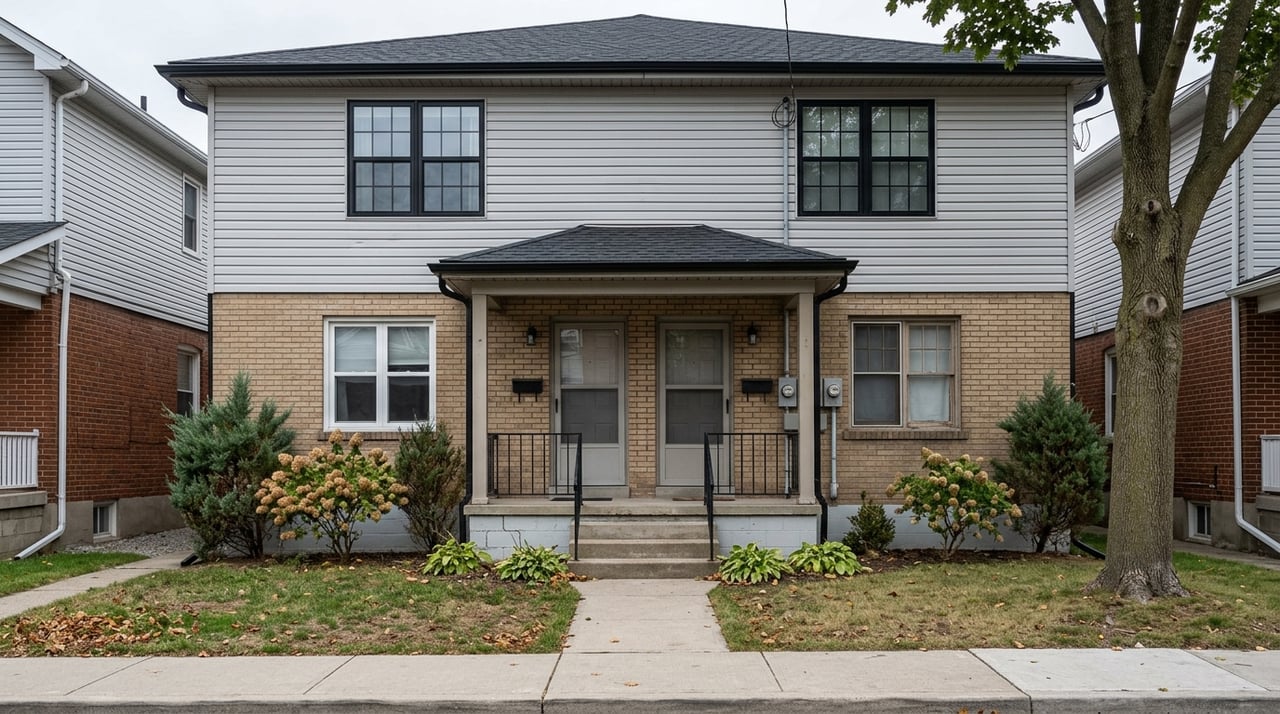
In practical terms, you are often looking at older brick duplexes, triplexes, four-units, and occasional 6- to 8-unit buildings. Recent public listings reflect that pattern, with examples from the late 1800s, 1910s, and 1920s. These are often solid, useful buildings, but they usually come with more inspection, repair, and systems review than a newer property would.
Common Property Types You May See
- Duplexes with two 2-bedroom units
- Triplexes with mixed layouts
- Four-unit brick buildings
- Small apartment buildings with 6 to 8 units
- Properties with basements, garages, or separate furnaces
That older-building profile can work in your favor if the property has been maintained or thoughtfully updated. It can also create upside if the current rents do not reflect the building’s full potential after repairs. Still, you want to stay disciplined and make sure the renovation budget matches the condition.
Use East Chicago Rent Benchmarks
One of the biggest mistakes investors make is using rent assumptions from a broader market that does not match East Chicago. The city’s FY 2024-2028 Consolidated Plan gives a more useful ZIP-level picture for 46312. It lists Small Area Fair Market Rents of $810 for a 1-bedroom, $990 for a 2-bedroom, $1,220 for a 3-bedroom, and $1,320 for a 4-bedroom unit.
Those numbers are more helpful than broad Chicago-area or even countywide assumptions. The same plan notes that East Chicago ZIP rents are among the lowest of the metro ZIP-code fair market rents, and that the metro-area average 2-bedroom fair market rent was $1,254. That means local underwriting should stay grounded in East Chicago data, not outside expectations.
A Smarter Way to Underwrite Rents
When you review a property, compare each unit to the local benchmark by bedroom count. Then ask whether the building’s current condition, layout, and utility setup support that rent level. An older unit with limited updates may need to underwrite below benchmark, while a renovated larger unit may justify more.
Recent listing platforms show a wide spread in estimated income. For example, public examples included triplex rent estimates of $1,117, $1,216, and $1,512 depending on the building and setup. These are not signed leases, but they show how much renovation level, unit mix, and building age can affect projected income.
Cash Flow Depends on More Than Rent
In East Chicago, gross rent is only the starting point. To understand whether a deal really works, you need to test the income against local expenses, vacancy, and reserve needs. Older small multi-family buildings can produce cash flow, but only if your assumptions are realistic.
A property that looks strong on paper can weaken quickly if you miss recurring costs. This is especially true when owner-paid utilities, deferred maintenance, or code-related repairs are involved. Before you make an offer, break down the property’s operating picture unit by unit and system by system.
Key Expenses to Review
- Property taxes
- Insurance
- Water, sewer, and trash
- Gas and electric responsibilities
- Repairs and maintenance
- Vacancy allowance
- Management costs
- Capital reserve funds
- Code-compliance and inspection-related costs
Utility Structure Can Change the Deal
Utility setup is a major factor in East Chicago small multi-family investing. Some recent listings show tenants paying gas and electric, with individual furnaces for separate units. Others include owner-paid costs or shared utility bills that can reduce your net operating income.
This is one of the first areas to verify during due diligence. You want to know exactly who pays for each service, whether utilities are separately metered, and whether the current setup supports your projected cash flow. Even a property with decent rent numbers can perform very differently once shared utility costs are added back in.
Questions to Ask About Utilities
- Are gas and electric separately metered?
- Does each unit have its own furnace?
- Who pays water, sewer, and trash?
- Are there common-area utility costs?
- Have utility bills changed recently?
Older Buildings Need Bigger Rehab Reserves
East Chicago’s aging housing stock makes inspection and reserve planning especially important. The city’s 2024 Harbor Neighborhood NRSA report says almost 90% of units built before 1980 in the NRSA are at risk of lead-based paint contamination. That is a serious reminder to inspect carefully and budget responsibly.
This does not mean every older property is a bad investment. It means you should go in with clear eyes. Buildings from the 1890s to the 1920s can still be attractive opportunities, but they often require more attention to roofs, windows, masonry, plumbing, electrical systems, and code items.
Rehab Items That Deserve Extra Attention
- Lead-paint risk in older units
- Deferred maintenance
- Basement moisture issues
- Mechanical system age
- Electrical updates
- Plumbing condition
- Exterior brick or masonry repairs
- Safety and code-related items
If your numbers only work with a very small repair budget, that is a sign to slow down and review the deal again. In a market with older housing, a stronger capital reserve can help protect your returns over time.
Know the Local Rental Rules
East Chicago has active rental compliance requirements, and investors should factor that into their plan from the start. According to the city’s Building Department, owners must register all rental housing annually and pay $5 per rental unit, community, building, or parcel. New acquisitions must be registered within 30 days.
The city also conducts periodic joint inspections with the Health, Fire, and Air Quality departments, and it inspects one- and two-family and multi-family dwellings. For you as an investor, that means compliance is not a side issue. It is part of the real operating environment and should be built into your timeline and expense planning.
Model Taxes the Indiana Way
Property taxes can have a major impact on cash flow, so it is important to model them correctly. In Indiana, the Department of Local Government Finance says property tax bills are capped by circuit-breaker rules. Homestead properties are capped at 1% of gross assessed value, while other residential property is capped at 2%.
For investor-owned duplexes, triplexes, and small apartment properties, the 2% cap is usually the baseline assumption. That cap can help you estimate the upper range of tax exposure more realistically. It does not change the local tax rate itself, but it does affect the final bill.
What a Local Investor-Savvy Broker Helps You See
In a market like East Chicago, local knowledge matters. A small multi-family property can look promising at first glance, but the real story often comes down to local rent support, unit condition, utility setup, and compliance details. That is where neighborhood-level experience can make your search more efficient.
Working with a brokerage that understands Lake County and handles duplexes and multi-family properties can help you compare current listings with realistic local expectations. You can also get a better sense of whether a seller’s income claims match the market and whether the rehab scope fits your goals. That is especially helpful if you are buying your first investment property or adding to a small portfolio.
How to Approach East Chicago Deals
If you are considering a small multi-family investment in East Chicago, stay practical. Focus on real rent support, verify who pays utilities, review age-related risks, and build in room for repairs and compliance costs. A conservative deal analysis is often the difference between a stressful purchase and a smart one.
East Chicago can offer opportunity for investors who respect the local numbers and the realities of older housing stock. If you want help sorting through duplexes, triplexes, and other small multi-family options in Lake County, Alejandrina Perez can help you evaluate properties with a local, hands-on perspective.
FAQs
What rent levels should you use for East Chicago multi-family investing?
- For ZIP code 46312, the city’s FY 2024-2028 Consolidated Plan lists Small Area Fair Market Rents of $810 for 1-bedroom units, $990 for 2-bedroom units, $1,220 for 3-bedroom units, and $1,320 for 4-bedroom units.
What types of small multi-family properties are common in East Chicago?
- East Chicago commonly has older duplexes, triplexes, four-unit buildings, and some small apartment properties, with many structures dating from before 1970 and a large share built before 1939.
What should you watch for when buying an older East Chicago rental property?
- Pay close attention to deferred maintenance, lead-paint risk in older housing, mechanical systems, electrical and plumbing condition, utility setup, and any code-compliance items.
What rental registration rules apply to East Chicago investment properties?
- The city requires annual rental registration, a $5 per rental unit community, building, or parcel fee, and registration of new acquisitions within 30 days, with periodic inspections involving multiple city departments.
How are property tax caps applied to East Chicago investment properties?
- Indiana’s circuit-breaker system generally caps other residential property, including many investor-owned small multi-family properties, at 2% of gross assessed value.
Why does utility setup matter in East Chicago multi-family underwriting?
- Utility structure affects net income because some properties have tenant-paid gas and electric with separate furnaces, while others include owner-paid or shared utility costs that can significantly change cash flow.