Thinking about a home in Griffith or Gary and wondering if a basement can be your budget-friendly way to gain more space? You are not alone. For many first-time buyers in Lake County, basements are the most practical path to a playroom, office, or extra bedroom. In this guide, you will learn the types of basements you will see locally, what they cost to finish, safety and code basics, and how each option might affect value. Let’s dive in.
Basement types in Lake County
Unfinished basements
An unfinished basement usually has exposed concrete or block walls, a concrete floor, and visible mechanicals like the furnace and water heater. Many older homes around Griffith and Gary have this setup. Typical uses include storage, laundry, or a small workshop.
For buyers, this is the lowest cost option and a chance to customize later. The trade-off is moisture risk if drainage is poor and no added “finished” living area for appraisal. A dry, well-maintained unfinished space can still be a win if you are value-minded and comfortable with a future project.
Partially finished basements
A partially finished basement blends usable rooms with unfinished areas. You might see drywall in the rec room but open joists over the laundry, or new vinyl flooring in one section and bare concrete in another. Families often use these spaces for a play area, home office, or workout zone.
The appeal is extra livability at a lower cost than a full finish. Appraisers may give partial credit depending on the quality and access, which can help with marketability. If you want flexibility without going all-in, this is a practical middle path.
Fully finished basements
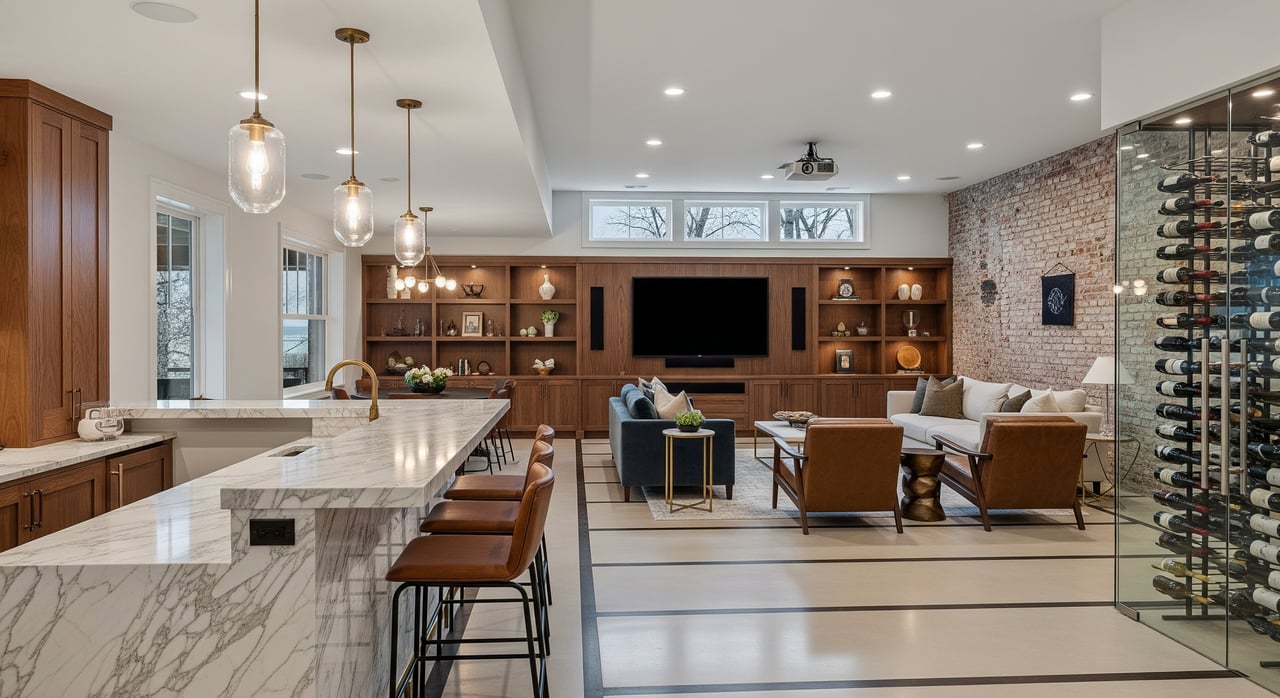
A fully finished basement has insulated walls, drywall, finished floors, a finished ceiling, and proper lighting and HVAC. These spaces may include a bedroom, bathroom, or even a kitchenette. Some owners consider an in-law suite or rental use, which depends on local zoning and permits.
This option offers the most day-to-day usefulness and buyer appeal. It also costs the most and must meet code for habitable rooms. If you plan to use a basement bedroom, legal egress and minimum ceiling height are essential.
Local construction and condition notes
Many older Lake County homes were built with poured concrete or concrete block foundations. Block walls can be more prone to moisture paths and may need patching or parging over time. In mid-20th-century housing stock common to Gary and nearby neighborhoods, expect that waterproofing, insulation, electrical, and HVAC may need updates.
Lake County’s relatively flat topography and groundwater in some areas can raise the risk of water intrusion. Exterior grading, clean gutters and downspouts, perimeter drains, and sump pumps are key protections. Ask about any water events or repairs and look closely for signs of moisture during showings and inspections.
Code, safety, and permits in Griffith and Gary
Egress for sleeping rooms
If you want a basement bedroom, it must have an emergency escape and rescue opening. The model standard followed by many jurisdictions comes from the International Residential Code. Exact measurements depend on the edition adopted locally. Plan for permits and costs if you need to cut in an egress window or add an exterior door. Verify details with the Griffith or Lake County building department.
Minimum ceiling height
Habitable basement areas must meet minimum ceiling height requirements. Older basements with low ceilings may not qualify without major work. Measure before you plan a bedroom or media room so you do not invest in finishes you cannot legally use as living space.
Mechanical, electrical, and plumbing
Finishing a basement can trigger updates like GFCI outlets in appropriate locations, adequate lighting for egress pathways, and proper heating and ventilation. Adding a bathroom or kitchenette increases plumbing and HVAC scope and requires permits and inspections. Build permit timelines and fees into your budget and schedule.
Radon testing and mitigation
Indiana has areas with elevated radon potential. Testing is simple and inexpensive, and mitigation systems are common if levels are high. It is smart to test before you invest in finishes so you can route piping and fans efficiently.
Floodplain, insurance, and finishing
If a property sits in a mapped flood zone, a basement may be costly to insure and could face restrictions. Check floodplain status and insurance implications before deciding to finish. Local floodplain rules, along with federal guidance, influence what is practical.
Zoning for rental or ADU use
Converting a basement to a separate rental unit or accessory dwelling may require specific permits, inspections, and compliance with zoning. Some areas restrict separate dwelling units. Confirm rules before planning a suite you expect to rent.
What it costs in Lake County
Prices vary by project scope and local labor, but these ballpark ranges can help you plan. Always obtain multiple local bids.
Waterproofing and prep
- Basic waterproofing like interior perimeter drains, a sump pump, and minor patching: about $2,000 to $8,000.
- Exterior grading and downspout improvements to move water away from the foundation: about $500 to $4,000.
- Radon testing: roughly $100 to $200. Mitigation system: about $800 to $2,500.
Egress windows and exterior access
- Full egress window conversion with a new opening, well, and ladder: commonly $1,500 to $5,000 or more per opening depending on foundation type and complexity.
- Window well installation when the existing window already meets opening size: about $500 to $2,500.
Finishing by square foot
- Basic finish without a bathroom: roughly $30 to $60 per square foot. Think insulation, drywall, painted or exposed ceiling, basic flooring, and basic lighting.
- Mid-range finish with better materials and added HVAC vents or built-ins: about $60 to $100 per square foot.
- High-end finish with bathroom(s), a wet bar or kitchenette, walk-out access, or custom features: $100 to $200 or more per square foot.
- Adding a 3/4 bath: often $8,000 to $25,000 depending on fixtures and plumbing layout.
Structural or remediation items
- Foundation repair, from crack injections to more serious wall corrections: about $3,000 to $20,000 or more depending on severity.
- Major exterior waterproofing with excavation and new drainage membrane: about $10,000 to $30,000 or more.
- HVAC upgrades to serve finished space: about $1,500 to $6,000 or more.
- Testing and abatement for hazards in older homes can vary widely. Plan to test before disturbing materials.
What drives cost up or down
- Square footage you plan to finish and how many rooms you create.
- Structural changes like cutting for egress or adding support.
- Moisture, waterproofing, or foundation repairs discovered during prep.
- Plumbing and HVAC complexity for bathrooms or kitchenettes.
- Local labor and materials that often track Chicago metro pricing.
- Permit, design, and inspection fees.
Value, offers, and ROI
Appraisers and buyers tend to value finished below-grade space lower per square foot than above-grade living area. The reason is simple. Basements can have limits on natural light, height, and moisture risk. This does not mean a finished basement lacks value. It means you should compare finish quality to neighborhood norms.
For sellers, modest and well-executed finishes often produce the best returns. Think lighting, durable flooring, fresh paint, and a simple bathroom if plumbing allows. High-end luxury finishes may not fully pay back in modest neighborhoods.
If you are a first-time buyer, look for alignment with your goals. A fully finished, code-compliant basement can make a smaller home live much larger. An unfinished but dry basement can be the smart choice if you want the lowest upfront price and you are willing to phase improvements later.
Buyer checklist for basements
- Ask for history: sump pump age, backups, any past flooding, and repair records or insurance claims.
- Look for moisture clues: efflorescence on walls, peeling paint, musty odors, staining lines at the floor perimeter, or fuzzy white growth.
- Confirm egress in any basement sleeping room and test the window or door for easy operation.
- Measure ceiling height and check for duct or beam obstructions in areas you plan to use as living space.
- Request a radon test if none is available. Budget for mitigation if results are elevated.
- Check electrical safety, ventilation, and that heating is present in finished areas.
- Order a full home inspection and specialist reviews as needed, such as structural or mold.
- Verify flood map status and talk to your insurance agent about basement coverage.
Seller tips before you list
- Resolve active moisture issues and document repairs with photos and invoices.
- If you plan to finish, focus on cost-effective upgrades that buyers notice. Prioritize proper egress for any bedroom, bright lighting, neutral paint, and durable flooring.
- Pull permits and keep paperwork for completed work. Unpermitted finishes can reduce buyer confidence and slow closing.
- Test for radon and, if needed, install mitigation. Provide results to buyers to remove a common objection.
- For any rental or ADU plans, confirm zoning and registration rules before advertising.
Choose the path that fits your budget
- If you want the lowest buy-in: Target a dry, unfinished basement. Stabilize moisture and plan phased finishes.
- If you want extra space without breaking the bank: A partially finished basement can be an ideal compromise.
- If you need turnkey space now: A fully finished, code-compliant basement costs more upfront but may save you time and stress.
Your choice should match your budget, timeline, and comfort with projects. The good news is that Lake County offers options across all three paths.
Ready for smart next steps?
Every property is unique. We can help you read the basement’s story, price out improvements, and negotiate with confidence. If you want a second set of eyes on a home in Griffith, Gary, or anywhere in Lake County, reach out to our local team. Connect with Alejandrina Perez for bilingual guidance and a clear plan that makes your next move smart, right, and easy.
FAQs
Can I use a basement bedroom in Gary or Griffith?
- Only if it meets local building code for egress, minimum ceiling height, and proper mechanicals. Verify requirements with the local building department.
How much does it cost to finish a basement in Lake County?
- Basic cosmetic upgrades can be a few thousand dollars. Typical finishes range from about $30 to $100 or more per square foot. Get multiple local bids.
Will a finished basement increase my home’s value?
- It can improve marketability and offer more usable space, but below-grade area often appraises for less per square foot than above-grade. Match finishes to neighborhood norms.
Should I worry about radon in Northwest Indiana basements?
- Yes. Indiana has areas with elevated potential. Test before finishing and budget for mitigation if levels are high. Systems are common and relatively affordable.
What if the home is near a flood zone?
- Check flood maps and talk with your insurer before finishing. Floodplain status can affect feasibility, insurance cost, and what work is allowed.